Pythagoras is undoubtedly one of the most famous philosopher/mathematician. Pythagoras is infamous for the eponymous Pythagorean Theorem. In fact, anthropologists have found that the theorem was found before by other cultures - Babylonians, Egyptians, and the Indians.
The theorem states that the square of the hypotenuse in a right-angled triangle is equal to the sum of the squares of the other two sides.
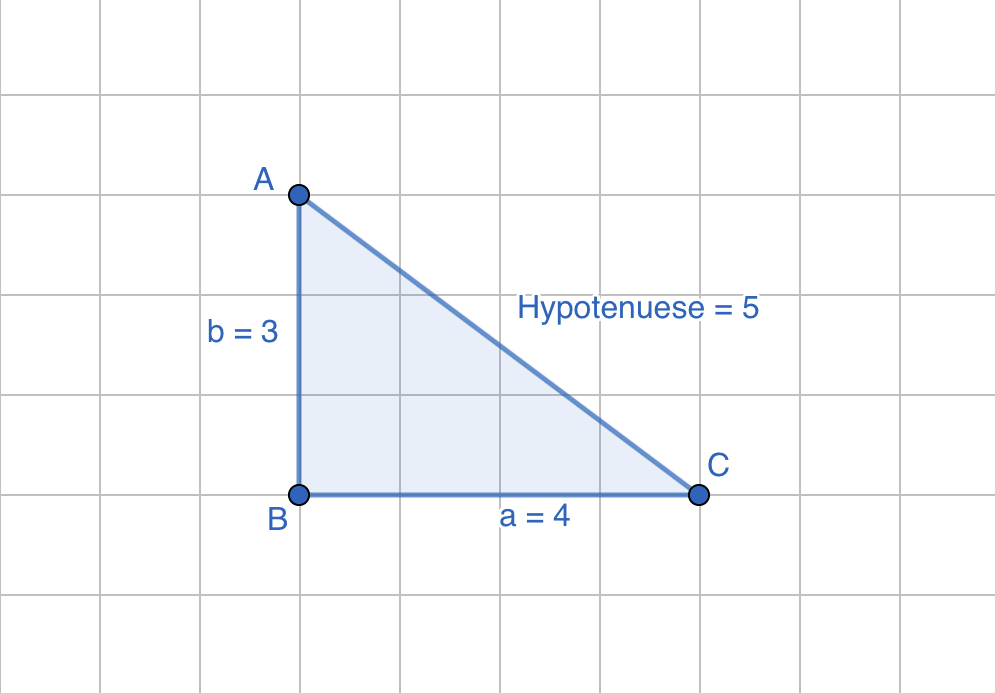
Mathematically, the theorem can be expressed as:


 We know that triangle ABC is a right-angled triangle, hence, the Pythagorean theorem should apply.
A few weeks ago during lunch, I saw a student X approach student Y’s table. Student X sitting at the table asked Student Y to maintain social distance for safety from Covid, as per New York State regulations.
You may want to consider buying this tee-shirt from teepublic.com

As per New York State regulations, the recommended social distance, d, from other individuals is 6’. What geometrical shape (circle, triangle, square, or rectangle) will ensure a 6’ distance?
Hint: Draw a circle with radius 6. Draw a square/ triangle with sides 6’ to ensure that all the sides are 6’ apart.
Comments
Post a Comment